
GST 2.0 and Beyond: Why India’s Economy is Primed for Growth

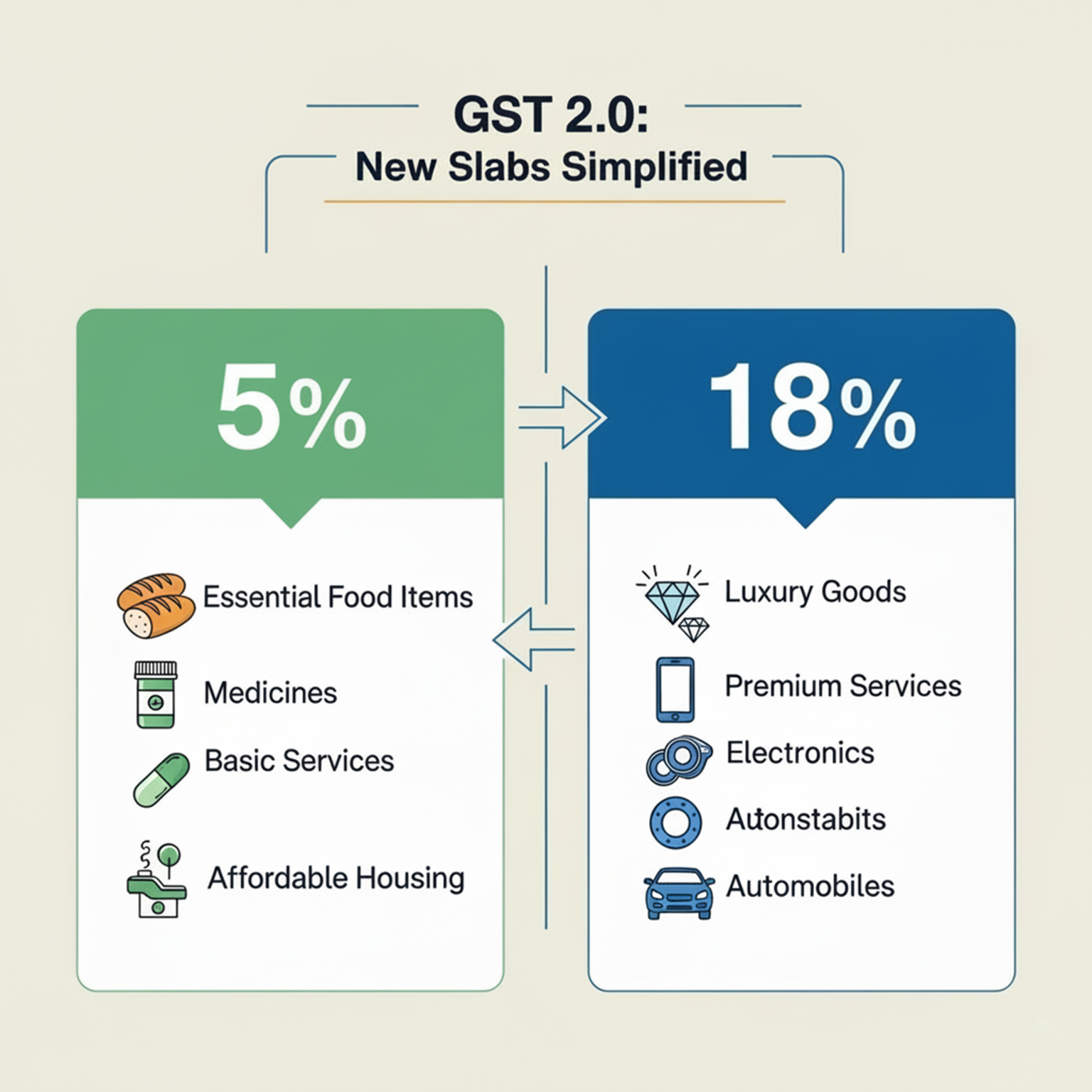
With the advent of GST 2.0, the new framework is expected to simplify the GST system, reduce compliance burdens, and encourage economic activity. India is on the verge of great economic progress. Let’s look at the first steps made toward achieving this positive economic outlook.
Understanding GST 2.0
On September 22, 2025, GST 2.0 will come into effect. From this date, the new, simplified GST will comprise two slabs: 5% and 18%. Gone is the complex four-tiered system. It will also be simpler for the general populace and the businesses to navigate. Essential goods, such as soaps and packaged food, and other bicycles will be taxed 5%. Consumer durables and construction supplies will be taxed 18%. Tax on luxury goods remains at 40%. Revenue neutrality will be maintained.
Economic Implications of GST 2.0
The new GST will bring significant positive change to the Indian Economy as predicted: *Improved Compliance and Efficiency: The simpler the system, the easier and more likely for businesses to file, and the complete system will yield better compliance.
- Increased Consumer Expenditure: Lower taxes on basic necessity goods increase disposable income which results in increased consumer expenditure, which can stimulate demand in other areas of the economy.
- Growth by Sector: Growth in the economy and investment in the automobile, agriculture, and healthcare sectors will continue as a result of the lowered taxes.
Sectoral Impacts
Agriculture
The farming sector will benefit the most from GST 2.0, which is possible due to the elimination and reduction of taxes on tractors and other farming hardware. This reduction in taxes on equipment will improve operational efficiency, productivity and income in the farming sector.
Automobiles
The impact of reduced taxes in the automobile sector depends on the type of vehicle. Two-wheelers with engine capacities of 350cc or smaller will undergo a significant price reduction for consumers by as much as ₹5,000 to ₹26,000. In contrast, two-wheelers with engine sizes larger than 350cc will undergo price increases of about ₹30,000.
Healthcare
The tax on essential medicine and medical equipment has been lowered to 0-5%, which is a significant reduction from the previous higher tax rates. Therefore, healthcare will be more affordable and accessible to a greater number of people.
Challenges and Considerations
GST 2.0 offers significant advantages, but it will certainly come with its challenges as well.
- Consumer Complaints. Almost 3000 complaints have been logged to the National Consumer Helpline about the reporting of the tax cuts, which shows some businesses may not be passing the benefits on as intended.
- Revenue Implications. The Revenue Department projects the loss of GST value on consolidated revenue to be about ₹93,000 crore. Introduction of a 40% GST slab on luxury goods is expected to make up for some of the loss at ₹45,000 crore.
The Path ahead
GST 2.0 is aimed at improving more than the tax system. With the expected increase in GDP as a result of the multiplicative effects of tax compliance, consumer spending, and sectoral growth, the future looks promising for the Indian economy.
Conclusion
The GST 2.0 reforms represent another step towards growth for India’s economy. With a streamlined tax structure and increased demand and compliance, these changes set the foundation for a better future. India’s economic changes in the near future focus on ensuring the resulting growth is economically resilient and inclusive for all individuals.